

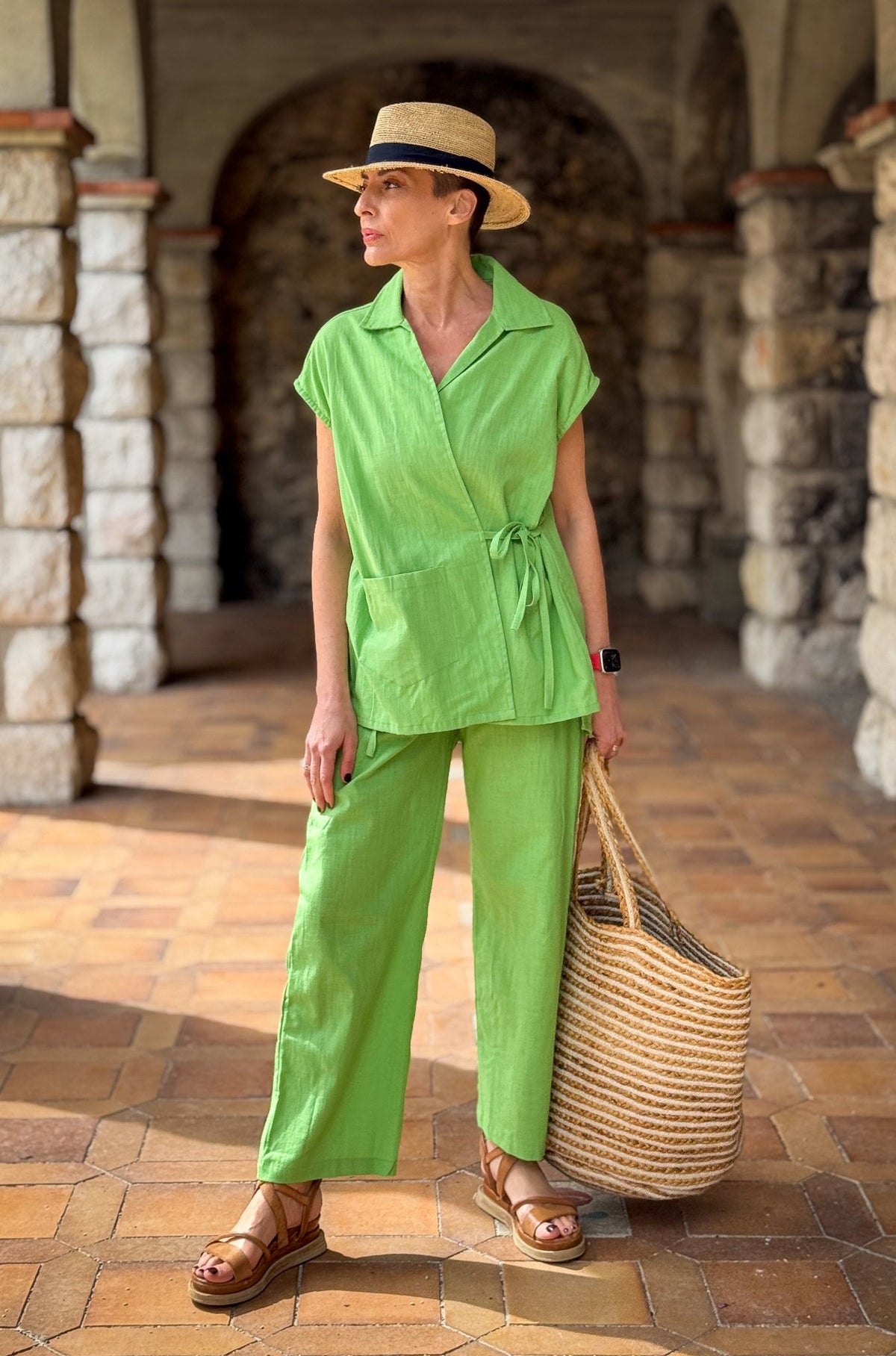
Fluid, soft and comfortable to wear, a silk and viscose dress has a naturally elegant appeal. This blend combines the delicacy of silk with the suppleness of viscose to create light, comfortable garments full of movement.
But not all silk and viscose dresses are alike. The fabric composition, cut, length and finishing details influence their appearance as much as their comfort.
At L’Atelier de Sonja, I love working with fabrics that move with the body, designing flowing shapes and choosing prints that give each creation its character.
In this article, I would like to share a few tips to help you understand this blend and choose a dress that suits your figure, your style and the way you want to dress.

Why choose a silk and viscose dress?
Silk and viscose have complementary qualities. Combined in the same fabric, they create a supple garment that feels pleasant to the touch and drapes beautifully.
A fluid, natural drape
One of this blend’s main strengths is its fluidity.
Unlike some stiffer fabrics, silk and viscose can be used to make dresses that follow the body’s movements naturally. The garment flows around your figure without necessarily clinging to it, making it particularly well suited to loose cuts, maxi dresses and bohemian styles.
This is something I particularly appreciate when designing my creations: I like the fabric to follow each gesture and create a feeling of lightness.
The degree of fluidity does, however, vary with the weave, the fabric’s thickness and the garment’s cut.
A soft, comfortable fabric
Silk is valued for its delicate feel and subtle sheen. Viscose also brings softness and suppleness.
Together, they create fabrics that feel pleasant against the skin, especially for light dresses and garments worn directly against the body.
Comfort also depends on the cut: a loose dress allows more freedom of movement than a very fitted style.
Lovely lightness for warmer days
Silk and viscose dresses are particularly pleasant to wear in mild or warm weather.
A sufficiently loose cut lets you enjoy the fabric’s lightness. A very fitted dress, on the other hand, may feel less comfortable in intense heat.
As with any lightweight fabric, it is important to check its thickness and whether the dress is see-through.
Elegance that is easy to adapt
A silk and viscose dress can be casual or dressed up.
With flat sandals and a basket bag, it is perfect for a summer day. Paired with delicate jewellery and dressier shoes, it can become a lovely evening outfit.
This is one of the things I love about flowing clothes: the same piece can be worn in different ways to suit your accessories and the occasion.
Silk, viscose and satin: what is the difference?
These three terms often appear together, but they do not mean the same thing.
Silk is a natural fibre valued for its softness, lightness and luminous appearance.
Viscose is a textile fibre made from cellulose. It is known for its suppleness and fluidity.
Satin, meanwhile, describes a type of weave, not a fibre. A satin fabric can be made from different fibres, with or without silk.
A shiny dress or one that feels silky does not necessarily contain silk.
To find out a garment’s actual composition, I always recommend checking its label or product page.
Sari silk: a signature fabric at L’Atelier de Sonja
One of the fabrics I use in my collections is called sari silk, made from 70% regenerated silk and 30% viscose.
These are not garments cut from old, previously worn saris. The fabric is made from regenerated silk fibres blended with viscose.
I particularly appreciate this fabric for its fluidity, pleasant feel and natural drape. It is perfectly suited to the bohemian spirit I want to express through my creations.
It also has a very welcome everyday advantage: it is crease-free and needs no ironing. Care is simple, as it can be machine washed at 30°C.
I personally conceive and draw the designs for my collections. The garments are then made in small batches by the partner workshop I work with in Pushkar, Rajasthan, India.
I pay close attention to prints, colour combinations and cuts that show the fabric at its best.
Not all my creations are made from the same fabric, however. I also offer garments in viscose, linen or cotton, depending on the collection.
The composition of each design is stated on its product page.

How to choose your silk and viscose dress
1. Choose a cut that suits your style
The cut plays an essential role in the appearance of a flowing dress.
In my collections, I like to offer different silhouettes so that every woman can find a dress that suits her.
- A wrap dress naturally defines the waist with its ties and, depending on the design, allows you to adjust the neckline.
- A shirt dress creates a relaxed, elegant look. Buttoned down the front, some styles can also be worn open as a long overshirt.
- A kaftan dress puts ease and fluidity first. Its loose cut follows the body without feeling tight.
- A backless maxi dress creates a dressier silhouette, especially lovely for summer evenings.
- A short, loose dress, such as a babydoll style, feels light and carefree.

When I design a garment, I aim above all to find the right balance between its shape, the fabric’s movement and comfort.
I believe a dress should let you move freely and feel at ease.
Loose silhouettes are not just for one particular body shape: it all depends on the proportions, the garment’s length and how you like to wear it.
2. Find the right length
A maxi, midi or short dress has a different effect on your silhouette.
A maxi dress particularly highlights the fabric’s fluidity. It follows your movements and works for both relaxed outfits and dressier occasions.
A midi dress, with a hemline between the knee and ankle, is a useful middle ground for everyday wear.
A short dress creates a lighter look and is easy to wear on warmer days.
Before choosing, I recommend checking the measurements on the product page. A dress that reaches the model’s ankles may fall differently on you, depending on your height.
3. Take time to check the size guide
Flowing garments often offer a degree of freedom of movement, but that does not mean the same dress suits every body shape.
In my collections, measurements vary by cut and design.
Some creations come in one size, while others are available in several sizes, including plus sizes.
I recommend comparing your measurements with those given for the garment you are interested in.
If you are unsure between two designs, please get in touch: I can help you understand the measurements and choose the most suitable cut.
4. Choose your colours and prints
Prints play an essential role in my creative world.
Floral motifs, botanical inspiration, graphic designs and unexpected colour combinations give each fabric its personality.
I particularly enjoy seeking out original colour harmonies and imagining how a print will come to life when it becomes a garment.
A richly patterned dress often speaks for itself. Simply pair it with understated shoes and accessories to let the motifs shine.
A more subtle print, on the other hand, can easily be combined with a kimono, a light jacket or colourful accessories.
For me, choosing a print is above all a matter of personal taste. A dress you love wearing and rediscovering in your wardrobe is often the one that stays with you the longest.
5. Adapt your dress to different occasions
A silk and viscose dress is not limited to one season or one way of dressing.
For holidays and summer days, I recommend a loose, lightweight cut that is easy to wear with flat sandals and a natural-fibre bag.
For a day out in town, I love pairing a shirt dress or a printed maxi dress with trainers and a denim jacket.
For an evening out, a flowing dress with a few pieces of jewellery and dressy shoes creates an elegant outfit without looking too formal.
Between seasons, you can add a cardigan, a light jumper or a kimono, taking care to preserve the fabric’s movement.
This is the freedom I aim for when I create a bohemian dress: a garment that can change its look simply by changing the pieces you wear with it.
How to care for a silk and viscose dress
Care depends on the fabric’s composition and how it is made.
For my sari-silk dresses, made from 70% regenerated silk and 30% viscose, care is particularly simple.
They can be machine washed at 30°C and need no ironing, because the fabric is crease-free.
This is a real advantage for everyday clothes, as well as for holidays and travel.
I love the idea of offering dresses that stay beautiful and comfortable to wear without needing complicated care.
For the other fabrics in my collections, I recommend checking the care advice on each product page, as instructions may vary according to the fabric.
A dress that reflects your personality
Choosing a silk and viscose dress is about more than choosing a fabric.
It is also about finding a cut you feel good in, a print you love and a garment you will want to wear on different occasions.
Through L’Atelier de Sonja, I design creations that embrace this freedom: flowing, colourful, feminine clothes that are easy to make your own.
I like to think that a dress can accompany a woman through different moments in her life, from a relaxed day to a special occasion.
Whether you prefer a bohemian maxi dress, a loose cut or a dressier design, what matters most is choosing a piece that feels like you.
Frequently asked questions about silk and viscose dresses
Is a silk and viscose dress suitable for summer?
Yes. Lightweight fabrics and flowing cuts are particularly pleasant on warmer days. Comfort does, however, depend on the fabric’s thickness, the cut and the weather conditions.
What is the difference between a pure silk dress and a silk and viscose dress?
A pure silk dress is made exclusively from silk fibres. A silk and viscose dress combines the two fibres in the proportions stated on its label.
In my sari-silk collections, I use a blend of 70% regenerated silk and 30% viscose, valued for its fluidity and ease of care.
Are flowing dresses suitable for plus sizes?
Yes, provided you choose a design whose measurements suit your body shape.
I love creating cuts that allow plenty of freedom of movement, but each garment has its own proportions. I therefore always recommend checking the size guide before ordering.
Can you wear a bohemian maxi dress in winter?
Absolutely. You can pair it with a jumper, a cardigan, tights or ankle boots.
I particularly like combining a flowing dress with soft knitwear on cooler days. Simply adapt your layers to the temperature.
How do you wash a sari-silk dress?
For my sari-silk dresses, a machine wash at 30°C is all that is needed. The fabric is crease-free, so it does not need ironing.
It is a fabric I appreciate as much for its beauty as for how easy it is to live with every day.
Share:
Kaftan vs caftan vs kimono: what each one is and which one suits you
How to Wear a Boho Maxi Dress: 10 Outfits from Beach Day to Wedding Guest